Welcome to My World


February 26, 2018

A List of 45 Books About Writing


Books. We read them. We write them. We love them.
Even a writer who’s been at it for a while can always learn something new. Sometimes when my brain gets stale, or I find myself struggling with some aspect of a story, a short visit to my personal library will give me the boost I need. Refreshing oneself is part of the creative process.

I’ve listed the tomes on my bookshelf in alphabetical order for convenience, but almost all of these titles have been invaluable to me at some point in my career. Many are about techniques and style, while others address the business and promotion aspect of being an author. But don’t stop here--search your favorite bookseller for new releases about this craft we love and hate at the same time.

Toni Leland’s Bookshelf
American Slang - Robert L. Chapman, Ph.D.
Benet’s Reader’s Encyclopedia
Between the Lines - Jessica Page Morrell
Book Marketing from A-Z - Francine Silverman
Conversations with American Writers - Charles Ruas
Dangerous Men & Adventurous Women: The Appeal of Romance - Jayne Ann Krentz, editor
Dictionary of Cultural Literacy - Hirsch, Kent & Trefil
Elements of Grammar - Margaret Shertzer
Elements of Style - Strunk & White
Emotion Amplifiers - Angela Ackerman & Becca Puglisi
Feature & Magazine Writing - David E. Sumner & Holly G. Miller
Fiction Dictionary - Laurie Henry
Finding Your Voice - Les Edgerton
G M C: Goal, Motivation & Conflict - Debra Dixon
Grammatically Correct - Anne Stilman
How to Write Dazzling Dialogue - James Scott bell
How to Write Killer Fiction - Carolyn Wheat
Merriam-Webster’s Manual for Writers and Editors
New Encyclopedia of American Scandal - George Childs Kohn
No More Rejections: 50 Secrets to Writing a Manuscript That Sells - Alice Orr
On Writing - Stephen King
Oxford American Writer’s Thesaurus
Oxford Dictionary of Quotations
Plot & Structure - James Scott Bell
Self-Publishing Attack - James Scott Bell
Story Structure Architect - Victoria Lynn Schmidt, Ph.D.
Take the Mystery Out of Promoting Your Book - P.M. Terrell
Techniques of the Selling Writer - Dwight V. Swain
The Art of Character - David Corbett
The Career Novelist - Donald Maass
The Chicago Manual of Style
The Complete guide to Article Writing - Naveed Saleh
The First Five Pages - Noah Lukeman
The Forest for the Trees - Betsy Lerner
The Novel Writer’s Toolkit - Bob Mayer
Webster’s II New College Dictionary
Wham Bam Publishing: Strategic Marketing Plan - Janice & Joan Phelps
Write Your Novel From the Middle  - James Scott Bell
Writer’s Guide to Places - Don Prues & Jack Heffron
Writing Fiction for All You're Worth - James Scott Bell
Writing Mysteries - Sue Grafton, editor
Writing the Blockbuster Novel - Albert Zuckerman
Writing the Breakout Novel - Donald Maass

February 21, 2018

Inside a Writer's Mind

A peculiar thing happens to writers. Not immediately, you understand. But as we learn our craft and smooth the rough spots, the rhythms of writing start to become second nature. Then, suddenly, we find ourselves unable to read fiction or watch a movie without applying every tidbit we've gleaned from myriad how-to books, magazine articles, workshops, and conferences.
This may not seem like a big thing, but for me, the phenomenon comes close to obsessive. Imagine a family member's reaction when I groan about a story I'm reading: "Why did the author do that? It's not in character!" Or I turn and smile knowingly at my husband: "Did you see the way the screenwriter used foreshadowing?" or "Right there--that was the second turning point!" He just shakes his head.

But this new awareness is not a bad thing. The very fact that we as writers recognize the structure, symbolism, and end intent of another's work proves that we are growing--absorbing the sweat equity of those who have clawed their way to the top of the cliff and hoisted themselves over. A reward, if you will.

Every craft has its weirdness, and it takes a certain amount of "hermit-ness" to stay the course. But behind the drive to become published, a thought hovers in the back of every writer's mind as he or she reads a bestseller or watches a great movie--I can do this.


©2018 Toni Leland

February 19, 2018

Don't be Boring Just to Make Word Count

A few years ago, I had a great Skype session with my almost-13-year-old granddaughter, who was an avid reader and a great help to me with my Young Adult WIP, Tattoo, The Awakening.

Anyway, she asked what the next few scenes would be and I mentioned that my main character would be taking a trip to another state. She nodded, then leaned forward so I could see her expression on the screen.

"Well, okay, but leave out the boring stuff."

This caught me off guard. What would a young teen find boring about a trip? So I asked her, and she didn't hesitate at all.

"You know, sitting in the plane, taking off, all that stuff. If you use the plane trip, make it exciting. Like, if the plane crashes and she's the only survivor!"

Okay, I can see that this child will not be fooled by filler. And if she isn't, then neither will the thousands of other young readers we hope to woo with our tales.

So, back to boring. In the early stages of my fiction-writing career, I attended a workshop given by a successful writer in which she outlined the parts of a novel and their importance. She focused on the "sagging middle" because that's where many authors have problems. She talked about breaking up the story into mostly equal word counts to achieve the final goal, and how to dole out the story points through the whole thing.

Could I keep my mouth shut? Nope. During Q&A, I mentioned that my story was finished, but I only had 65,000 words and the required count was 85,000. How could I fix it? Without missing a beat, she said, "Come up with more story." It was the right answer, but what she didn't include was HOW to do that. I had to learn that on my own.

A story arc has three "acts" made up of scenes. Each scene should tell the reader something new and move the story forward smoothly. A story outline can give the author a map to follow and, like a road trip, should include some scenery and attractions along the way. Building the story world is one way to expand word count, but add too much and you'll have readers skipping through the narrative. Extensive character description can also expand word count, but most readers prefer to visualize a character themselves rather than read about the mundane physical details. Dialogue is one of the best writing techniques for carrying a story, but make every word golden. Lots of dialogue is good and provides plenty of white space on the page that gives one the feeling of reading quickly. But dialogue that tracks every reply and grunt and "Hi" and "Yeah" and "Fine, how are you?" is boring! We write stories not about real life as it boringly is, but real life as it is interesting. Conflict is the foundation of every story, so use it to the fullest. 

Know ahead of time what your genre expects for word count and include it in your initial story plan. I recently found this great explanation of word counts; it will make life much easier for me in the future and I hope for you too.

To figure out how to achieve your desired word count, look at each scene or plot point and ask yourself, "What else can happen to make this more interesting?" This is how you "come up with more story."

Now, about that plane crash...

February 14, 2018

Feeding the Writer's Muse


Writing is hard work! (No one believes that but other writers.) One of the things that commonly happens to those of us who spend hundreds of hours at our computers is we either 1) forget to eat, or 2) resent having to stop to eat, or worse—cook. Sounds harmless, but feeding the brain is a very important part of writing.
Feeding the Muse 
The brain requires a steady supply of glucose (carbohydrate) in order to function correctly. In fact, the brain uses twice the energy of any other cell in your body and can only utilize carbohydrate to generate that energy. Now, I'm not talking about a steady diet of chocolate or potato chips (although the chocolate sounds like a good plan to me), but a writer must not fall into the habit of not eating because they are on deadline or on a roll. Conversely, too much sugar can cause brain fatigue. Avoid sweet soft drinks, pastries, cookies, and candy among others.

I keep snack foods in a drawer near my desk for those times when I,m hungry, but don't want to stop what I'm doing. Snacks that provide the mental energy without the calorie load include dried fruit (apricots, cranberries, raisins, etc.), nuts (walnuts and almonds), and easy to eat fresh fruit (blueberries, cherries, grapes, etc.).

Another cause of brain fatigue is dehydration. Again, who wants to leave their work to go get a drink of water? I keep a small bottle of water at hand, and try to drink at least 8 cups of water per day. Other beverages that will hydrate but not overload your brain with sugar include caffeine-free tea and fruit juice.

Plot With Your Crockpot! 
As far as I'm concerned, my crockpot is my best friend. With just the tiniest bit of planning, I can sit down to a delicious dinner at the end of the day without having interrupted my work flow. On any given day, I write at least one blog post, one gardening article, text for my websites, begin or finish a feature article or column. I love not having to think about food!

For those who are away from home during the day, set up the crockpot in the morning or the night before, plug it into a timer so it will come on and turn off at the correct hour. You'll have a nice meal waiting for you, and can get on with your writing on a full tummy.

Here's one of my favorite crockpot recipes.

Pork Ragout with Fruit
Serves 8
Ragout is simply a fancy name for stew! You can substitute chicken, but be sure to use dark meat only. Breast meat will dry out during the long cooking time.

4 lbs bone-in pork shoulder or finger ribs
1/2 tsp salt
freshly ground pepper to taste
1 cup chopped onion
1 tsp ground ginger (or 2 tsp fresh grated)
1 Tbs brown sugar
1/4 cup red-wine or sherry vinegar (cider works just as well)
1 tsp dried thyme (or 1 Tbs minced fresh)
1 can reduced sodium beef broth (or 1 bouillon cube + 1 cup water)
1 cup whole dried apricots or peaches
1 cup dried cranberries (I use Craisins) or cherries or even prunes
1 cup dry sherry (or orange juice)
2 Tbs water
2 tsp cornstarch

Arrange onion in bottom of crockpot. Add meat, then season with salt, pepper, ginger, brown sugar, and thyme. Add vinegar, broth, sherry or juice, and fruit.
Cover and set to low. Cook 4 to 6 hours, depending on your experience with your own crockpot. Before serving, thicken liquid with cornstarch/water.

This dish is perfect served in a bowl or, if you feel like serving it over rice, it's fabulous that way too!


Other super-easy and delicious crockpot meals include Mac & Cheese and Simple Chicken. Google recipes that are one step meals–who has time to brown meat and fry onions and pre-cook stuff to go into the crockpot!

2018 Toni Leland

February 12, 2018

Why Do I Write Horse Fiction?

My name is Toni Leland and I’m a horse addict. 


Seriously...I could have been the poster child for the classic horse-crazy girl.

I discovered horses when I was about 7 years old. Unfortunately, about the same time, I discovered that my father was terrified of them and that there wouldn’t be a horse in my future any time soon.

So to fuel my passion, I hooked up with another horse-crazy girl. We spent hours talking about horses, dreaming about horses, pretending we were horses. . .the boys on the playground were terrified of us!

I took it one step further and wrote stories about horses. Girl rescues horse. Horse rescues girl. Horse and girl have an adventure. . . I wish I had some of those stories now!

Anyway, when my BFF got her very own horse, I was both thrilled and devastated. She no longer had much time for me and our imaginary steeds, and I began the press to convince my father that a horse would be a good thing for me to have.

He relented the year I turned 12 and, from then on, my life revolved around horses—sometimes more, sometimes less.

But one thing remained constant. To this day, even though I no longer have horses of my own, I still get that quickening in the pit of my stomach any time I’m near one.

Write what you know and love. The writing experts have it nailed.

When I set off on this journey of writing fiction, I naturally settled into the comfort zone of my addiction.

My first book was a romantic mystery, built around the Arabian horses I raised in the 80s. Though they were long gone, I held them near to me as we worked our way through the story and revisited characters from those years in the “horse business.” The process was sometimes painful and poignant, but it was also energizing. I’d found my niche.

As Winning Ways finished, I was already well into my next novel. Being fairly adventurous, I’d decided to see if I could write a straight romance—follow the formula, but write one with a horsey setting.

I was a little skeptical about the endeavor. After all, when does a busy horse owner have time to date, let alone nurture a strong, loving relationship? And into what niche would an equestrian romance fit?

When Hearts Over Fences hit the streets, I quickly learned that I had no clue as to “what works.” The book exploded in popularity and today it is still selling in both print and ebook.

So you’d think I’d jump on this gravy train, right? Nooooo. I was already off on another tangent. I wanted to write a thriller about the possibility of terrorism in one’s own backyard, er. . . barn. After Gambling With the Enemy was published in 2006, I headed back toward romantic suspense.

Deadly Heritage embraced that age-old theme of love lost and found. But my characters were constantly challenged by danger and family treachery.

As the nation’s economy nose-dived in 2009, so did business. Horse farms and breeders were deeply affected as the cost of keeping animals skyrocketed. If you can’t feed ’em, what do you do with them?

Horse rescue operations were overwhelmed and the horror stories began to hit the news.

Addressing two similar subjects, I began work on Rescue Me, the story of a horsewoman trapped in a brutally abusive marriage. The research alone on this book made me ever thankful that I didn’t have answers from first-hand experience.

Always a fan of Dick Francis, I began thinking seriously about a mystery series. What I needed was a couple of independent, horse-loving individuals who would save the horse world, case by case. Never did I imagine what hard work this would be! But the team of Kovak & Quaid was born in 2012, and they've been chasing bad guys ever since!

My lifelong love affair with horses has served me well...given me joy and inspiration, and a ton of memories. Now if I can just get them all down on paper....


November 28, 2015

Book Reviews We Love, And Why – A Message to Readers

photo of book covers at libraryby Toni Leland

Reader reviews are the tiny victories for any author. Or not.

Sure, we all love those 4 and 5 star ratings, and we most certainly can learn from the 3's and 2's. Sometimes.

Remembering that a book review is simply someone's opinion or reading preference helps take the sting out of the not-so-great posts. BUT ...

The reviews I love the most are the messages from my readers that tell me why they loved a particular story. They also tell me what I'm doing right, and when I do it wrong. Valuable feedback!

I recently had three such reviews, each of them thoughtful and encouraging.
A reader posted on Amazon about Deadly Heritage, 

a story of family deceit and long lost love. I read this reader's comments over and over, loving that she "got" what I was trying to convey.

"... being from Oklahoma and a huge Quarter Horse owner and fan, I really appreciated the authenticity of both the location and the knowledge of horses. Very realistic and believable."

So I feel connected to this reader through my story. I can picture her reading and nodding, gasping and possibly holding her breath as the plot unfolds.

A recent visitor post on my Facebook Author Page was equally heart-warming:
"We met at Equine Affaire last week and I purchased Gambling with the Enemy, not knowing what would happen in Paris that night. ... When I got home, I began to read the book ... Chills down my spine for a few reasons, mainly 9/11 and my personal connection to WTC. I could not put down your book. ... engaging, intriguing thriller, so believable."

This review was especially good for me because, when she bought the book, I worried that it was not a good choice for her introduction to my work. So much for second-guessing!

Another visitor post on Facebook was from a woman who read Balancing Act. "As a former Chicago carriage driver, and a rider for the Noble Horse Theater, that book was frighteningly accurate. I loved it!"

A perfect example of why I take so long to write a story! Getting it right is more important than "getting it out there."

Regardless of the number of stars, when a reader takes the time to write something – even if it's just "Good book!", they are providing an author with encouragement to continue putting those words into stories, or working to make them better.


September 18, 2015

Horseback Riding in Autumn


A hunter pace rider enjoying herself in Connecticut
A rider enjoying the day.
by Toni Leland

A sharp edge to the air, the soft thump of hooves on pine needles. What could be more invigorating than trotting through the forest or cantering over a rolling countryside in the fall? Organized for exactly that experience, hunter paces and turkey trots are the darlings of avid horse folk everywhere, but especially here in Connecticut...

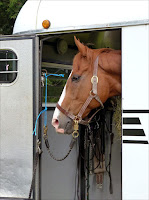
A pretty chestnut mare looks out of the horse trailer
Pretty chestnut, just waiting...
One of the great things about writing for Connecticut Horse magazine is that I can write about what I love. Horses have been my passion since I was a little girl, and to now be able to share that love with others is amazing.

Enjoy my article about hunter paces and turkey trots, a piece beautifully designed by the magazine for your reading pleasure. 

July 7, 2015

Mystic Valley Hunt Club – A Treasure in Southeastern Connecticut

by Toni Leland


Imagine riding your horse in a beautiful setting on 172 acres in Southeastern Connecticut. Better still, imagine taking lessons from Connecticut Hunter/Jumper Association’s 2014 High Point Hunter Trainer, Sally Hinkle Russell. These dreams can come true at Mystic Valley Hunt Club in Gales Ferry, a premier training facility owned and cherished by Sally.
Nice view of the riding ring at Mystic Valley Hunt Club in Mystic, CT
My very first assignment for Connecticut Horse magazine! Wow, a chance to meet this charming and caring horsewoman, and see the dream she made come true.

Join me as we talk with Sally, and walk her beautiful property. Happy horses and happy riders are everywhere, and that makes Sally happy!

A young rider and her horse sail over a jump at Mystic Valley Hunt Club in Mystic, CT
Connecticut Horse makes its debut with this issue. Look forward to many more issues packed with interesting and informative articles and details about horses in Connecticut.

June 18, 2015

Working Between Novels: Short Stories Keep the Brain Fresh

by Toni Leland

Writing "The End" to a 90,000-word novel is more than relief and celebration — there is a let-down too. After living with the characters and their dilemmas for anywhere from eight months to a year, an author can't help but find it hard to let go. Sure, once the story is done and published, the exhilaration lasts for several weeks. But then what?

Personally, I find it hard to plunge into another major project, even in a series. I need time to think about other things, but I also need to continue to write. The answer is short stories and freelance articles. These are short-term projects that keep the brain working like a finely-tuned machine and, interestingly enough, while the gray cells are focusing on the job at hand, they are also churning out deeper ideas for the next "big one."


A few years ago, I wrote several short stories for inclusion in women's magazines. One, in particular, was contracted immediately by a new romance publication; sadly, before the third issue could go to press, the magazine folded (underfunded and undersubscribed) and my story rights reverted back to me. I put it aside to await another opportunity. And forgot about it.


Cleaning up old files on the computer recently, I came across it. Read it. Still liked it. Did some fine-tuning and, as they say, the rest is history.


Second Chances debuted on Kindle this week and the process of setting the story free has recharged my batteries. I'm ready to begin work on the fifth book in my Kovak & Quaid series. Sometimes we authors just need a little break.


Second Chances, a romantic short story by Toni Leland

April 5, 2015

RISKY BUSINESS – the Kovak & Quaid Mystery Series Continues

Book four of the Kovak & Quaid Mystery Series by Toni LelandI'm always thrilled to announce that I've finished a book, but I'm particularly happy with the release of RISKY BUSINESS. Why? Because writing a series is not for the faint of heart!

I never dreamed when I started that something that seemed so simple could be so challenging. I mean, how hard is it to write stories in the same setting with the same people? I discovered that keeping everything straight for myself and my readers, as well as keeping my readers engaged with the characters for the long-term was not that easy.

So, I offer you Book 4 of the series and hope that you will enjoy reading it as much as I enjoyed writing it. Kovak & Quaid thank you!

~ Toni Leland

Risky Business releases April 20, 2015

October 6, 2014

Authors, Readers, and Book Reviews, Oh My!

by Toni Leland

All the experts tell me that I should blog frequently, tell the world what I know or think, or at least stay on the radar screen.

Frankly, I believe that if someone else can say it better, I'd rather share than try to reinvent the wheel!


So, my latest excitement is Anne R. Allen's blog post about the value of reviews and how they affect authors. Her insights are valuable and should be absorbed by anyone who writes for the public.


Additionally, the "review of the future" will be as it always has been: discoverability through word-of-mouth. I plan to keep this image where I can see it frequently, to remind me to share the wealth of wonderful reading I've experienced. Feel free to do the same for yourself. 


September 15, 2014

What Happens to a Book When an Author Dies?


by Toni Leland

Death and taxes – inevitable, but how many authors think about what will happen to their work after they’re gone? 

As authors, we control our characters’ lives: when they grow, when they fail, when they fall in love, or when they die. But most of us need a reminder that the future will come, whether we like it or not, sooner or later (hopefully, later).


Estate Planning for Authors provides just the guidebook we need to prepare for and face up to those inevitabilities. Written by attorney and author Gin Jones, I found this book to be just what I needed to help me make decisions about things like my copyrights, what to do with unfinished work when I pass, and how and when to consult with a professional. 

The book contains more than simple advice to seek an attorney and draw up a will – Jones discusses the ramifications of dying without a will, and includes examples that are, quite frankly, frightening. She interviews and quotes well-known authors, and cites actual cases where an author’s will didn’t measure up when the time came to disperse assets.

I strongly recommend that ANY writer read Estate Planning for Authors and make a plan accordingly. We work too hard on our stories and articles and poetry and research to have those vestiges of ourselves discarded, or worse – abused.


April 17, 2014

The Value of Book Reviews and Dealing with the Trolls

by Toni Leland


Recently, a successful writing colleague of mine commented that she’d received a truly nasty Amazon review of her newest release. I really sympathized with her—been there, felt that. And as I’ve wondered so many times in the past, my thought was: why do readers feel the need to vent their opinions so viciously? Or at all? If they didn’t like the book, is it necessary to say hurtful things to someone they don’t even know? Have they ever tried to write a book? Do they have any clue to what goes into crafting a story? Never mind getting it published!

I visited the title in question and, sure enough, amid several excellent reviews was a one-liner: the book was garbage, don’t waste your money, don’t read this author’s work. As I’ve done in the past with a couple of less-than-stellar Amazon reviews of my own books, I clicked through to see this reader’s “other reviews.” There were none. Perhaps this person is a beginning reader. Sometimes, the “reviewer” will have their own agenda, be involved personally with another title or author, or simply have nothing better to do with their time. We’ll never know the real story. But be assured that these nay-sayers wouldn't trash a book if they came face-to-face with the authors; the anonymity of the Internet gives some people the courage to be unkind.

So—

Don’t confuse a reader’s “opinion” with a book review. Comments like the one above belong in a forum where bashing is the norm. Book reviews are a whole different breed.
A “real” book review is comprised of many parts:

  • Why or how the book relates to the reader’s interest;
  • The reader’s perception of how well the author used his or her craft, vis a vis language, characters, plot, etc.;
  • What audience would enjoy the book;
  • A brief description of the plot, without giving away key points (spoilers) or the ending;
  • Why the reader did or did not enjoy the book.

Where's the Value?


On Amazon, one poor opinion in the midst of many good ones tells us that someone might just be marching to a different drummer (such as an avid horror fan trying to “review” a romance). But many bad opinions that echo each other tell us that perhaps the book really is a stinker. But a poor review is not always a bad thing, if it was given in the spirit of constructive criticism. We can learn from our readers’ honest comments just as much as we can glow from the praise. If there are dozens of 1's and 2's, look at the recurring theme of the comments. There is a valuable message there, a clue to what might make the book a better read.


Look at the overall average of the reviews; ideally, there should be a balance between the five-stars and the 3- and 4-stars. As with poor reviews, there will be a similarity of comment that can give an author insight into what he or she could change in future work. I recently struggled with a New York Times "best seller", wading through the first third of the book before giving up. I could not get into the story and felt disappointed. Later, on reading the reviews of this title, I heaved a sigh of relief; dozens of readers had voiced their disappointment with the lack-lustre characters, the slow pace of the book, and the fact that they "couldn't get into the story." A valuable message for the author.

Reviews and Sales

Do reviewer comments affect the sales of our books? I believe that today’s average reader has the ability to make a decision based on the synopsis and description of the book, the author’s track record, and the positive comments left by others.


So, authors—keeping working on developing lizard skin. Difficult, but our mental health and creative juices depend on it. Try not to let negative reviews sidetrack your love of the craft and determination to make each story a better one.


February 27, 2014

Writers Supporting Writers

by Toni Leland

Writing a book takes more than skill and a good idea. The process is time-consuming – actually, all-consuming – filling whatever time we have with not only actually putting the words on the page, but the research, the critiques, the brainstorming, the wringing of hands and, of course, the weeks or months of editing and polishing for publication. Then there's the promotion and marketing.

Time. Such a precious commodity to a writer – a facet of our life that we guard with a passion.

And then, someone asks for a favor. For a cover blurb, or critique, or review of their book.

It's easy to think we don't have the time, that this commitment will somehow keep us from our own goals. But wait! How did all this work out for us as we started on the author's journey? Someone, somewhere helped out, gave advice, steered us wrong or right, but took the time to mentor.

I recently read my monthly newsletter from Sisters in Crime and, interestingly, one of the articles was about what we authors can and should do for our colleagues. Author Laura DiSilverio graciously gave permission to print her excellent list of suggestions for those of us who would like to offer a supportive hand or shoulder to other writers.

“...No matter where you are on the writing/publishing continuum, from thinking you might want to write a novel to becoming a multi-pubbed, New York Times best-selling author, why not commit to an act of kindness (anonymous or not) towards another writer. Need ideas? Glad you asked.


  • Buy a debut author’s book.
  • Recommend a book you enjoyed to friends and family; better yet, buy it and give it to them.
  • Write a good review on Amazon, Goodreads, or any of the sites where readers hang out.
  • Offer a blurb to an author who just landed a contract. Don’t wait for them to ask. Offer. And do it.
  • Suggest sharing a signing with a new author if your name carries some clout.
  • Write an email to an author explaining what you think she did brilliantly in her last book.
  • Turn that email into a blog and distribute it widely.
  • Request that your library buy a particular book.
  • Re-tweet.
  • Post a positive review from a professional outlet about a book that’s not yours on your FB page.
  • Offer two hours of baby sitting to your writing buddy who has to squeeze in writing time around squalling kids.
  • Hook up (in the old-fashioned sense, not the twenty-something sense) with a writer new to your fave convention/conference and introduce him to three other people.”

This act of reaching out could be the best thing for a writer's brain – New York Times best-seller list excepted, of course!

Don't be too busy or too successful to help another writer on the path to realizing his or her dream. 

My thanks to Laura DiSilverio for sharing and caring.

July 29, 2013

BALANCING ACT, latest horse mystery by Toni Leland, launches August 5, 2013

I'm excited about the upcoming release of Balancing Act - Book 2 of the Kovak & Quaid horse mystery series. First available as an e-book on 8/5/13, the book will be in print on August 31.

Here's a peek at what these two are up to now...


Kim Kovak is a well-known equine photographer, a profession she adopted after recovering from a shooting accident that maimed her leg, killed her police horse, and forced her retirement from the Columbus Ohio Mounted Police Unit.

When a simple magazine assignment in Chicago involves an encounter with a runaway carriage horse, Kim is catapulted into the news, and the owner of a new equestrian attraction begs Kim to find the person responsible for the deadly epidemic sweeping through the barn. Horrified by the brutality of human nature, Kim accepts the job, but not without reservations. She may be retired law enforcement, but she's no private eye.

Insurance fraud investigator Garrett Quaid is also in Chicago, looking into a client's suspicions about an unfaithful husband. When Kovak calls to ask for help, Quaid finds himself again working with the woman who both hindered and helped track down a horse theft ring in Ohio the previous summer. Only this time, the working relationship is different.

A nasty scheme for revenge takes Kovak & Quaid on a roller coaster ride through professional jealousy and love-hate relationships in the world of talented and valuable performing horses. Will the two of them catch the perpetrators of a treacherous plot to put the Dream Horse Ballet out of business?

July 27, 2013

The inspirations behind BALANCING ACT, a Kovak & Quaid horse mystery by Toni Leland


by Toni Leland


For me, almost anything can be an inspiration to write about horses. As I said in my Amazon Author Profile, there is no known cure for horse-crazy. But plotting the newest mystery adventures of Kovak & Quaid landed me in the middle of something I'd loved for years – theatrical and artistic presentations with horses.

Evolving from something known as hippodrama at the turn of the nineteenth century, the use of horses in theatrical storytelling has endured through the centuries, changing, maturing, becoming ever more beautiful and awe-inspiring.

Those early shows blended circus-type horse riding and tricks with melodrama. The first such event opened in 1803 in London, a spectacle that included 36 horses and riders performing at the same time. The genre became popular and the story subjects usually centered on tales from the Far East or about European military feats. These performances were often billed as circuses, as evidenced by the first American theater building in New York (1825) – Lafayette Circus, and The Circus of Pepin and Breschard which presented Don Quixote de la Mancha in New York City in 1809. By the late 1890s, the genre had all but disappeared, replaced by moving pictures as entertainment for the masses.

But horses are still a huge draw and millions of people love them, own them, ride them, or simply turn out to watch them perform. My own first experience with horses in artistry was an amazing evening of costumes and beautiful riding skills, provided to hundreds of horse-folk and spectators at the large horse show in Springfield, Massachusetts in the late 80's. For someone who'd spent her life dreaming about being on horseback, these performances were thrilling. I wanted to do that!

My next encounter with this specialty entertainment was the Pfizer Fantasia at Equine Affaire. Okay, now they really had my attention! I can't tell you how many plots and ideas I dreamed up about the things I saw at those events. But more than that, the skill and care that was so apparent between the handlers, riders, or dancers and their horses was very emotional. Watching Sylvia Zerbini orchestrate 9 white Arabian horses with only hand and voice commands was an almost spiritual experience. The horses watched her every move, dancing around the arena to the strains of beautiful music. Or the black Friesians with their flowing manes and tails – carrying Carnival-costumed riders with feathered headpieces and glittering masks – moving in perfect cadence, each footfall in exact time to drums and a stirring beat.

Is this not the stuff of inspiration? So, on to my new mystery, Balancing Act.

Quite by accident, I came across a Facebook post about the Noble Horse Theater in Chicago. Now there's a great idea, I thought. And indeed, it is a fabulous place, housed in the oldest livery stable in the Windy City. Performances on horseback thrill thousands of people each year as they come to see The Legend of Sleepy Hollow, The Nutcracker, or Quadrille
So...what if a mystery were to unfold in such a place?

See? Inspiration!

And so an idea was born. It grew and evolved and changed many times. As I wrote, I researched, and my ideas exploded as the list of artistic equestrian venues grew. The Dancing Horse Theater near Lake Geneva, Wisconsin performs year around. The Alizee Horse Show is an amazing event, and Cavallo Equestrian Arts performs around the country. Cavalia and Odysseo are world famous attractions and – lucky me – I will be attending Odysseo in New England the week after Balancing Act is released.

After all, my inspiration well needs to be refilled, right?

March 10, 2013

Best Gardening Book Ever!

by Toni Leland

As I wait for the mountains of grey snow to melt for the second time this year, I've distracted myself with nursery mail-order catalogs and gardening books. What follows is my heart-felt review of the New England Gardener's Handbook. I had the good fortune to receive a review copy from the publisher and I can add a "thank you!" to them for this gem.


This is the gardening book I wish I'd owned when I returned to Connecticut last year. Though I'd lived here for many years previously, I'd forgotten most of what I must have known about gardening in this region. Even returning as an Ohio State University Master Gardener Volunteer, I still was at a loss as I began planning my new gardens.

First, this is a beautifully produced book with glorious photography and excellent design. As I began reading, I also began to chuckle at the authors' humorous approach to the eccentricities of New England weather. In all my years of gardening, in many parts of the country and even the world, I don't remember a garden guide that compares the weather effects of rural against urban, and how elevation can also change the equation. How many people know that deep snow acts as insulation that protects plants? Or that sometimes a gardener can develop a microclimate and enjoy plants and shrubs that might not otherwise survive?

New England Gardener's Handbook provides excellent basics for beginners, or newcomers to the region. The attention to detail reminds me very much of my old favorite, the "Western Garden Book", a Sunset Magazine publication from the late sixties. As mentioned above, the photographs are amazing in this 8 x 10 book filled with maps and icons for understanding the text. Eleven comprehensive sections list plant varieties alphabetically by common name, with full details for year-round maintenance and care.

After an introduction to environmentally sound gradening practices and an explanation on using the book, the sections that follow include annuals, perennials, bulbs, groundcovers, lawns & ornamental grasses, roses, vegetables & herbs, shrubs, vines, trees, and conifers. The Appendix covers pests, diseases, & controls; fertilizer & plant nutrition; pruning trees & shrubs; wildlife in the garden; and starting seeds indoors.

A good glossary, bibliography, and index round out this excellent regional gardening book written by well-known and respected garden authorities Jacqueline Heriteau, Holly Hunter Stonehill, Liz Ball, James Fizzell, and Joe Lampi.

With spring just around the corner, I'm now prepared.